AI Agents - The security nightmare of CISOs
27 Jan 2026

Introduction
AI Agents are changing how we work. From DevOps automation to knowledge retrieval and process orchestration, agentic systems are quickly becoming the connective tissue of modern enterprises.
But as these agents become more autonomous and powerful, they also become less predictable. They make decisions at runtime, access sensitive data dynamically, and often operate without a fixed execution path.
That's exciting - but it's also a security nightmare for enterprise compliance teams.
The Core Problem: Non-Deterministic Access to Sensitive Data
Enterprises have spent decades hardening their infrastructure with well-defined roles, permissions, and audit trails. AI agents break that model.
When an agent can decide what to fetch, summarize, or write at runtime, traditional access control tools like API gateways or IAM policies aren't enough.
Legal and security teams immediately ask:
"Who approved this data access?"
"Where was the data sent?"
"Can we prove compliance after the fact?"
The uncomfortable answer right now is usually: no.
The Emergence of MCP Gateways
To solve this, Anthropic introduced the Model Context Protocol (MCP) - a way for AI systems to connect securely to external tools and data for additional context. However, MCP by itself is a protocol - not a policy engine, audit layer, or compliance boundary.
That's where the Secure MCP Gateway from Datacline comes in.
A Secure MCP Gateway acts as the security and governance layer between an AI agent and enterprise data sources.
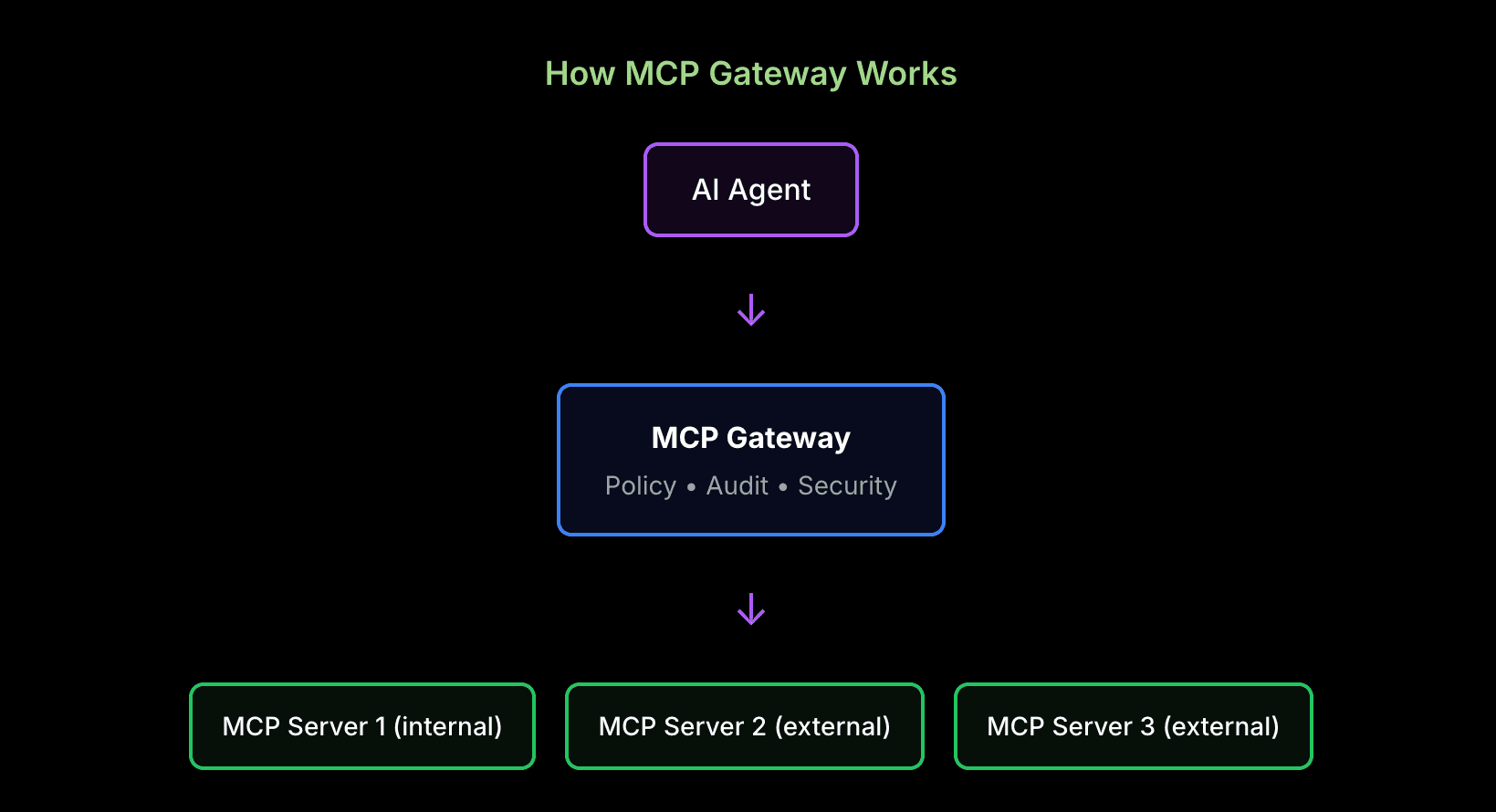
It controls:

The Datacline Vision
At Datacline.ai, we believe enterprises need more than just an API bridge. They need a policy-driven infrastructure layer that makes AI data access:
Secure - Zero-trust architecture with end-to-end encryption
Auditable - Every action logged, timestamped, and stored
Compliant - Built-in support for GDPR, HIPAA, SOC2
Developer-friendly - Simple YAML configs and CLI tools
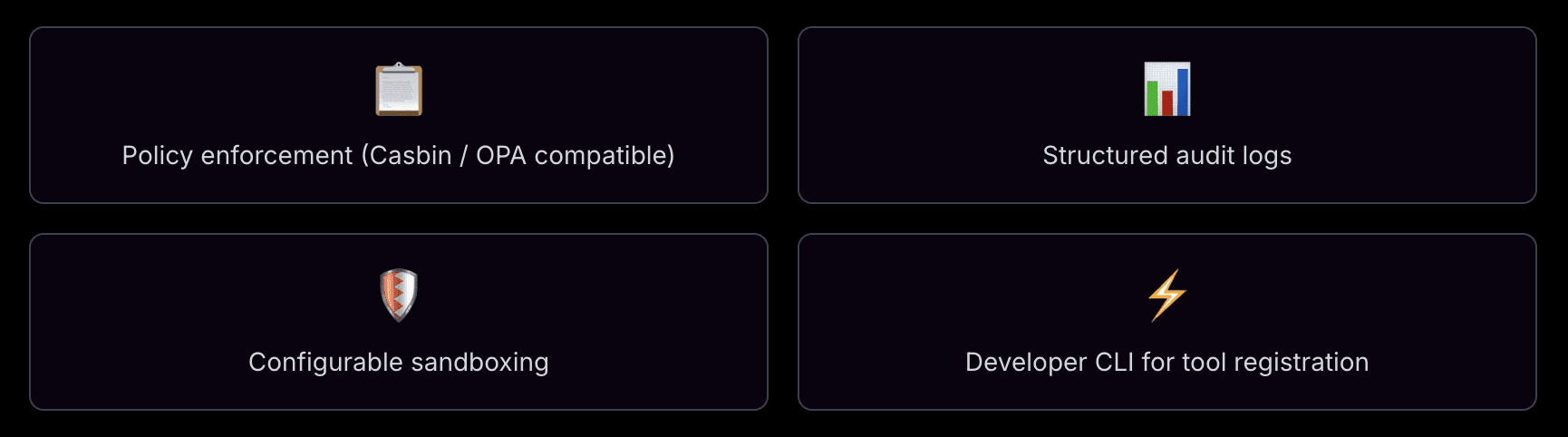
That's why we're building Datacline Gateway - an open-source MCP Gateway with built-in:
How It Works
Datacline Gateway Workflow:
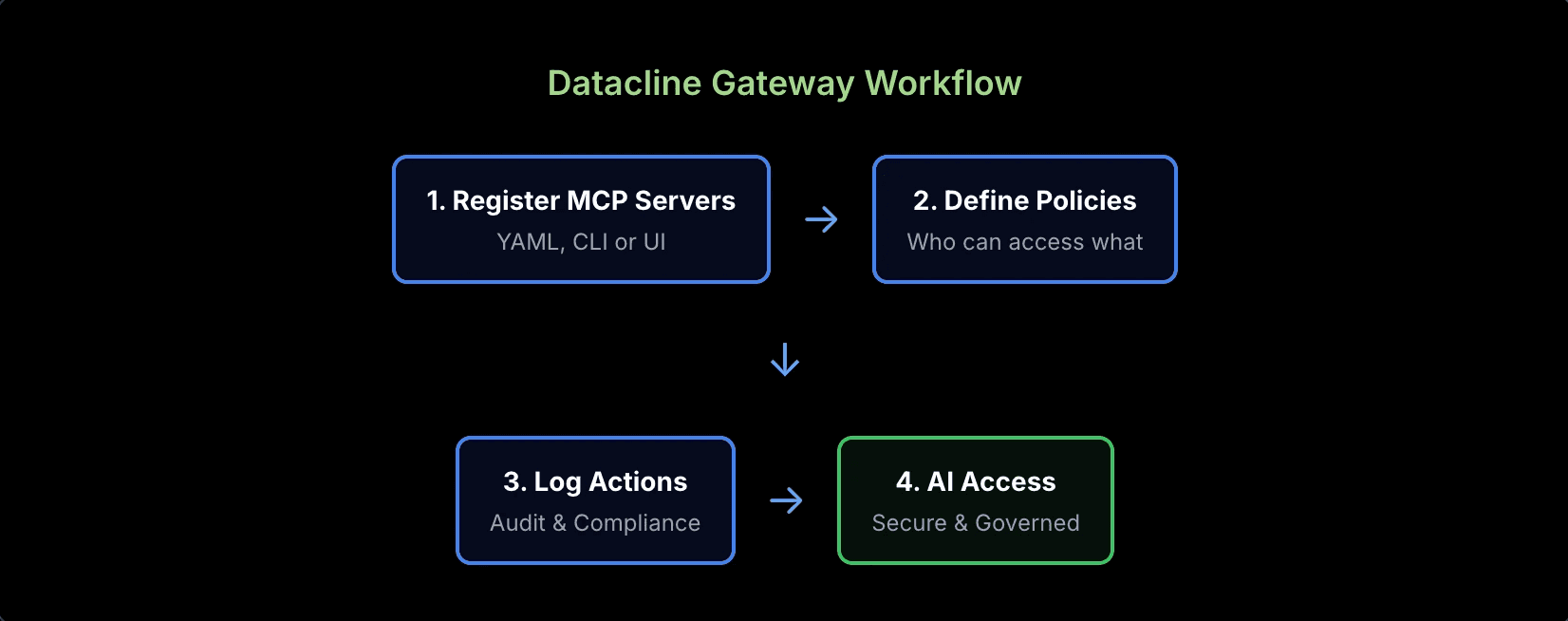
Admin/Developers register MCP servers both internal or 3rd party MCP servers via simple YAML manifests, CLI commands or UI
Policies define which agents or identities can access which tools and methods.
Every action is logged, timestamped, and stored for audit and compliance.
AI agents integrate with single Datacline Gateway URL via standard MCP protocol - no custom APIs needed.
The result:
Agents stay flexible and autonomous, but data stays governed and secure.
For Developers: Plug, Register, and Go
With Datacline Gateway, developers can add a new data source with:
And within seconds, that tools of the registered MCP server becomes available to AI agents - safely, and with all access tracked.
No custom backend, no IAM reconfiguration, no legal panic.
For Enterprises: Compliance Out of the Box
Datacline Gateway provides:
✅ Role-based policies aligned with enterprise IAM
✅ Centralized audit logging for every AI action
✅ Optional integrations with SIEM and SOC tools
✅ Support for on-prem or private VPC deployment
✅ Only pre-registered AI agents via admin approval
So when any AI agent accesses an internal system, you know exactly what happened - and can prove it.
Why Open Source Matters
Security infrastructure earns trust through transparency. That's why Datacline Gateway is open source, licensed under Apache 2.0, with enterprise features available under a hybrid open-core model.
Our goal isn't just to protect enterprise data - it's to build a shared standard for safe AI access across the industry.
Final Thoughts: From Control to Confidence
The AI era will reward organizations that move fast - but not recklessly. By adopting secure, policy-driven infrastructure like Datacline Gateway, enterprises can unlock the full potential of agentic AI without losing control of their data.
It's time to make AI adoption secure by design, not by exception.